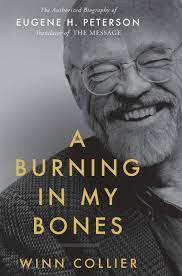
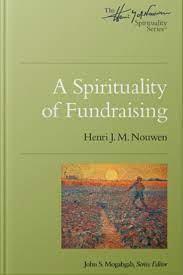
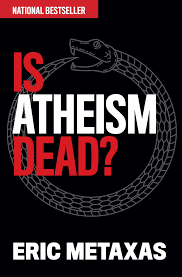
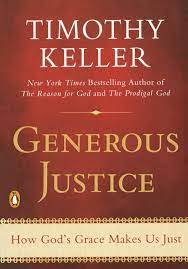
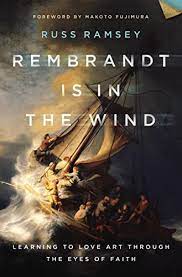
I absolutely love to read and enjoy conversations with others about what they are reading as well. Here are a few of the books I read recently, as well as a few of the ones that I am currently reading. I’d be glad to discuss any of them with you! What are you currently reading?
Living as a “Colony of Heaven” in the World – April 23, 2022
Our school uses a leadership development curriculum for our advisory program called Habitudes. The program is produced by Growing Leaders and it utilizes images to teach important leadership lessons. One of the lessons that all of our students have been taught is titled, “Thermostat and Thermometer: Leaders Set the Tone for Those Around Them”. The core lesson is to be a thermostat rather than a thermometer. Thermometers simply reflect the temperature, while thermostats dictate the temperature of the room. Leaders have a set of core values and live by them, striving to influence others, rather than allowing others to negatively influence them. This has been one of the most powerful and easily generalized lessons we have covered. Not long after I first used this lesson with my advisory, I realized that someone else utilized these same images long before they were adopted by the Habitudes curriculum.
On April 16, 1963, a little over 59 years ago, Dr. Martin Luther King Jr. penned the “Letter from a Birmingham Jail”. The letter was addressed to his fellow clergymen and it is chock-full of content worthy of reflection and discussion. If you have never read the letter in entirety, I encourage you to do so. Today, I’d like to draw our collective attention to one particular section of the letter as it utilizes the above imagery, and the powerful language provides a clear challenge for all of us to live in an manner that is antithetical to the ways of the world.
“There was a time when the church was very powerful–in the time when the early Christians rejoiced at being deemed worthy to suffer for what they believed. In those days the church was not merely a thermometer that recorded the ideas and principles of popular opinion; it was a thermostat that transformed the mores of society. Whenever the early Christians entered a town, the people in power became disturbed and immediately sought to convict the Christians for being “disturbers of the peace” and “outside agitators.”‘ But the Christians pressed on, in the conviction that they were “a colony of heaven,” called to obey God rather than man. Small in number, they were big in commitment. They were too God-intoxicated to be “astronomically intimidated.” By their effort and example they brought an end to such ancient evils as infanticide and gladiatorial contests. Things are different now. So often the contemporary church is a weak, ineffectual voice with an uncertain sound. So often it is an archdefender of the status quo. Far from being disturbed by the presence of the church, the power structure of the average community is consoled by the church’s silent–and often even vocal–sanction of things as they are.
But the judgment of God is upon the church as never before. If today’s church does not recapture the sacrificial spirit of the early church, it will lose its authenticity, forfeit the loyalty of millions, and be dismissed as an irrelevant social club with no meaning for the twentieth century.Every day I meet young people whose disappointment with the church has turned into outright disgust.“
I don’t know about you, but that is a complete punch in the gut for me. Obviously King’s criticism and call at the time was the need for the church to respond to the gross injustices being addressed in the civil rights movement. To that point, many within the church had completely ignored the blatant racism, injustice, and inequality of the day, in an effort to maintain the “status quo”. However, King’s message appears almost prophetic and equally applicable for so many of the issues of today, nearly 60 years later. In response, I have to ask myself some hard questions:
Am I acting as a thermostat or a thermometer?
Am I working to transform the mores of society, or merely accepting them?
Am I obeying God rather than man?
Am I living as a citizen of heaven, or a citizen of this world?
Am I working with the church to project a strong voice of grace and truth in the community?
Am I committed to do the right thing no matter the personal cost?
Am I sacrificing myself for the advancement of others and the Kingdom of God?
Where do I see those in need of help, or injustices being done, and do I take action?
Am I defending the last, the lost, and the least of these?
I was recently reading through Colossians and I came across these verses in chapter 3 that gave me some tangible insights into how to answer the above in a manner that ensures that I am living as a thermostat, not a thermometer.
“Since, then, you have been raised with Christ, set your hearts on things above, where Christ is, seated at the right hand of God. 2 Set your minds on things above, not on earthly things.3 For you died, and your life is now hidden with Christ in God. 4 When Christ, who is your life, appears, then you also will appear with him in glory. 5 Put to death, therefore, whatever belongs to your earthly nature: sexual immorality, impurity, lust, evil desires and greed, which is idolatry. 6 Because of these, the wrath of God is coming. 7 You used to walk in these ways, in the life you once lived. 8 But now you must also rid yourselves of all such things as these: anger, rage, malice, slander, and filthy language from your lips. 9 Do not lie to each other, since you have taken off your old self with its practices 10 and have put on the new self, which is being renewed in knowledge in the image of its Creator.11 Here there is no Gentile or Jew, circumcised or uncircumcised, barbarian, Scythian, slave or free, but Christ is all, and is in all. 12 Therefore, as God’s chosen people, holy and dearly loved,clothe yourselves with compassion, kindness, humility, gentleness and patience. 13 Bear with each other and forgive one another if any of you has a grievance against someone. Forgive as the Lord forgave you.14 And over all these virtues put on love, which binds them all together in perfect unity. 15 Let the peace of Christ rule in your hearts, since as members of one body you were called to peace. And be thankful...17 And whatever you do, whether in word or deed, do it all in the name of the Lord Jesus, giving thanks to God the Father through him.“
It is clear that we are to live differently. Our citizenship is in heaven and we are called to live in a manner consistent with our identity, purpose, and calling. Scripture gives clear reminders that we must not conform to the pattern of this world (Romans 12:2), and cultivating a friendship with the world creates enmity against God (James 4:4). As I walk this journey, I am more and more convinced that I need the accountability of fellow aliens to stay on the narrow path and eschew the ways of the world. In so doing, collectively we can operate as thermostats or “a colony of heaven”, to transform the culture around us, pointing people to Jesus.
What about you? As a leader, educator, professional, coach, student, parent, or Christ-follower, where do you have an opportunity to change the culture by leading from your convictions as a thermostat, rather than a thermometer? It didn’t take me long to identify several areas of opportunity. Let’s join together and change the temperature in the room.
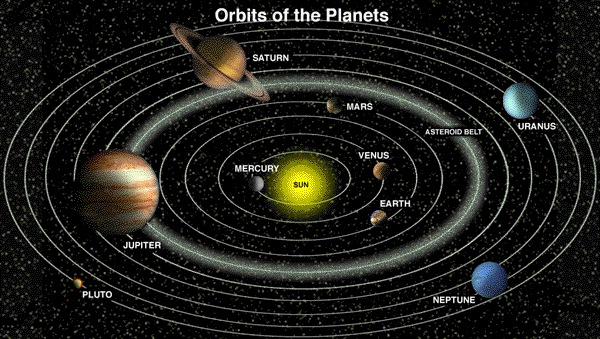
The geocentric model of the universe was the prevailing model from ancient times until the the 16th and 17th century. This model, championed by Aristotle and Ptolemy, stated that the sun, moon, stars, and planets all orbited around Earth. Using simple human faculties of observation, it appeared that the geocentric view was accurate, and it was widely accepted as truth, given a lack of evidence to the contrary. This slowly began to change when Copernicus introduced a heliocentric model of the universe, in which the sun was the center, and the moon, stars, and planets all orbited around it. One of the biggest proponents of heliocentric view was the Italian astronomer, physicist, and engineer, Galileo Galilei. Galileo was able to use the newly invented telescope, rather than simply human faculties, to observe celestial objects, including the phases of Venus, the moons of Jupiter, Saturn’s rings, as well as lunar craters and sunspots. Galileo’s observations supported the heliocentric view of the universe, the one universally accepted today. However, Galileo’s findings were met with significant criticism from the church and other astronomers alike. He was tried by the Roman Inquisition and found “vehemently suspect of heresy” and he was forced to recant. He lived the rest of his life under house arrest, until his death at the age of 77.
Changing course is extremely difficult, especially in the face of overwhelming opposition and life altering consequences, but that is exactly what Galileo did. The telescope allowed him to clearly see the truth, the truth that was there all along, yet was hidden to the naked eye. Galileo simply couldn’t ignore the evidence in front of him. Doubt became faith, when confronted with the evidence. Despite the personal cost, Galileo simply had to change course.The truth was more important than the consequence.
This weekend I was thinking about how the disciples undertook this kind of radical course correction after the crucifixion of Jesus. Consider all that had just transpired. Judas betrayed, Peter denied, and the rest scattered. Not one of the twelve attempted to intervene on behalf of Jesus. He was crucified and buried, and it seemed that three years of their lives were wasted on a mission that would never be realized. Let’s take a closer look at just one of the disciples in John chapter 20.
24 Now Thomas (also known as Didymus[a]), one of the Twelve, was not with the disciples when Jesus came. 25 So the other disciples told him, “We have seen the Lord!” But he said to them, “Unless I see the nail marks in his hands and put my finger where the nails were, and put my hand into his side, I will not believe.”26 A week later his disciples were in the house again, and Thomas was with them. Though the doors were locked, Jesus came and stood among them and said, “Peace be with you!” 27 Then he said to Thomas, “Put your finger here; see my hands. Reach out your hand and put it into my side. Stop doubting and believe.” 28 Thomas said to him, “My Lord and my God!” 29 Then Jesus told him, “Because you have seen me, you have believed; blessed are those who have not seen and yet have believed.”
Thomas was on one course, that of doubt in the resurrected Christ. The only thing that was going to convince him of the resurrection was hard evidence right in front of him. Well, that’s exactly what he got, and at that point, he believed. Like Galileo, once Thomas saw the truth, he was willing to change course and pay the cost. Jesus met Thomas in his doubts, giving him the opportunity to respond, but He also commends those that have faith without the need for evidence. The reality, however is that there is a significant amount of evidence for the resurrection of Jesus, and it is what caused all of the disciples to change course, at great personal cost.
Consider the words of Luke from Acts 1: “In my former book, Theophilus, I wrote about all that Jesus began to do and to teach 2 until the day he was taken up to heaven, after giving instructions through the Holy Spirit to the apostles he had chosen.3 After his suffering, he presented himself to them and gave many convincing proofs that he was alive. He appeared to them over a period of forty days and spoke about the kingdom of God.” He appeared to them over a forty day period and gave them many convincing proofs. How cool would it be to have heard Jesus give those convincing proofs. The response of the disciples after this period gives us great insight to exactly how convincing the proofs were they were confronted with the evidence and changed course. The truth was more important than the consequence.
Likewise, consider Paul’s words from 1 Corinthians 15: “3 For what I received I passed on to you as of first importance[a]: that Christ died for our sins according to the Scriptures, 4 that he was buried, that he was raised on the third day according to the Scriptures, 5 and that he appeared to Cephas, and then to the Twelve. 6 After that, he appeared to more than five hundred of the brothers and sisters at the same time, most of whom are still living, though some have fallen asleep. 7 Then he appeared to James, then to all the apostles, 8 and last of all he appeared to me also, as to one abnormally born.” Consider the weight of Paul’s argument here, Jesus appeared to more than five hundred brothers and sisters at the same time, and they are still alive. Essentially, if you don’t believe me – go ask them! There is so much weight here, not even considering Paul’s change of course from persecuting Christians, to becoming one, to being a missionary, and penning many of the New Testament Epistles. They were all confronted with the evidence, and the truth was more important than than consequence.
What exactly happened to the disciples? What was the cost of changing course for them after they met the resurrected Christ? What evidence did they encounter that was so compelling? Below is a summation of what can be gathered about their lives. As you read, consider what could have caused them to change course, to move from doubt to faith?
Paul – Martyred in Rome about 66 AD, during the persecution under Emperor Nero. Paul was beheaded.
Peter – Martyred in Rome around the same time. He was crucified, upside down at his request, since he did not feel he was worthy to die in the same manner as his Lord.
Andrew – went to present day Soviet Union. He was possibly the first to bring the gospel to this land. Preached modern-day Turkey and Greece, where he is said to have been crucified.
Thomas – missionary in the area of Syria. Traditionally traveled to India where many believe he was the first to bring the gospel to that area. They claim that he died there when pierced with the spear.
Phillip – had a ministry in North Africa and then in Asia Minor. After a conversion, in retaliation he was arrested and put to death.
Matthew – served in Persia and Ethiopia. Some reports say the was not martyred, while others say he was stabbed to death in Ethiopia.
Bartholomew – had missionary travels to India with Thomas, possibly also Armenia, Ethiopia and the Middle East. There are several mixed accounts about how he was martyred for his faith.
James – the son of Alpheus is believed to have ministered in Syria. It is reported that he was stoned and clubbed to death.
Simon the Zealot – he is said to have ministered in Persia and was killed after refusing to sacrifice to a false god.
Matthias – the disciple that replaced Judas. Most likely traveled to Syria with Andrew and was put to death by burning.
John – John is most likely the only apostle to die of natural causes. He led a church in Ephesus. During a time of persecution in the ’90s, he was exiled to the island of Patmos. There he wrote the last book of the New Testament, Revelation.
What could possibly have caused all of these, and so many more, to radically change course and give up their lives for the cause of Christ? They were confronted with the evidence of the Risen Christ – and they could not turn back. Regardless of overwhelming opposition and great personal cost, the truth was more important than the consequence. I pray that the same can be said of me.
He is Risen – be encouraged friends. Because He lives, we also shall live. Remember – our citizenship is in heaven!
Luke 19:41 As he approached Jerusalem and saw the city, he wept over it 42 and said, “If you, even you, had only known on this day what would bring you peace—but now it is hidden from your eyes.43 The days will come upon you when your enemies will build an embankment against you and encircle you and hem you in on every side. 44 They will dash you to the ground, you and the children within your walls. They will not leave one stone on another, because you did not recognize the time of God’s coming to you.”
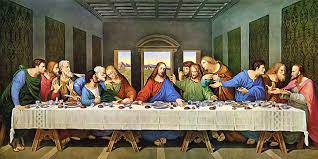
Luke 22:20 In the same way, after the supper he took the cup, saying, “This cup is the new covenant in my blood, which is poured out for you.[a]21 But the hand of him who is going to betray me is with mine on the table.
39 One of the criminals who hung there hurled insults at him: “Aren’t you the Messiah? Save yourself and us!” 40 But the other criminal rebuked him. “Don’t you fear God,” he said, “since you are under the same sentence? 41 We are punished justly, for we are getting what our deeds deserve. But this man has done nothing wrong.” 42 Then he said, “Jesus, remember me when you come into your kingdom.[d]” 43 Jesus answered him, “Truly I tell you, today you will be with me in paradise.”
2 Corinthians 5:17 Therefore, if anyone is in Christ, the new creation has come:[a] The old has gone, the new is here!18 All this is from God, who reconciled us to himself through Christ and gave us the ministry of reconciliation: 19 that God was reconciling the world to himself in Christ, not counting people’s sins against them. And he has committed to us the message of reconciliation. 20 We are therefore Christ’s ambassadors, as though God were making his appeal through us. We implore you on Christ’s behalf: Be reconciled to God. 21 God made him who had no sin to be sin[b] for us, so that in him we might become the righteousness of God.
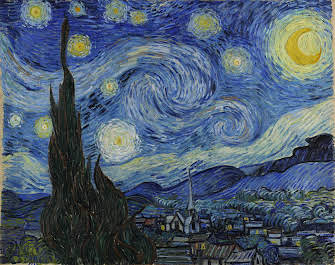
I’ve always been captivated by Van Gogh’s Starry Night. The beautiful heavenly bodies, the contrast of light and dark, the apparent motion, the brush strokes, all together, evoke a sense of wonder, and seem to draw me into the quaint little village where I am transfixed by the magnificence of the firmament. We are captivated by beauty, particularly the beauty of creation. In his book, Rembrandt is in the Wind: Learning to Love Art Through the Eyes of Faith, Russ Ramsey reminds us that, “beauty whispers to our souls that there is such a thing as glory” (p.6). Ramsey further explains that beauty draws us into deeper community as we participate in shared experience, prompting the application of goodness and truth for the benefit of others (p. 9). Like a magnetic force, beauty attracts us, appealing to our senses, revealing greater truth.
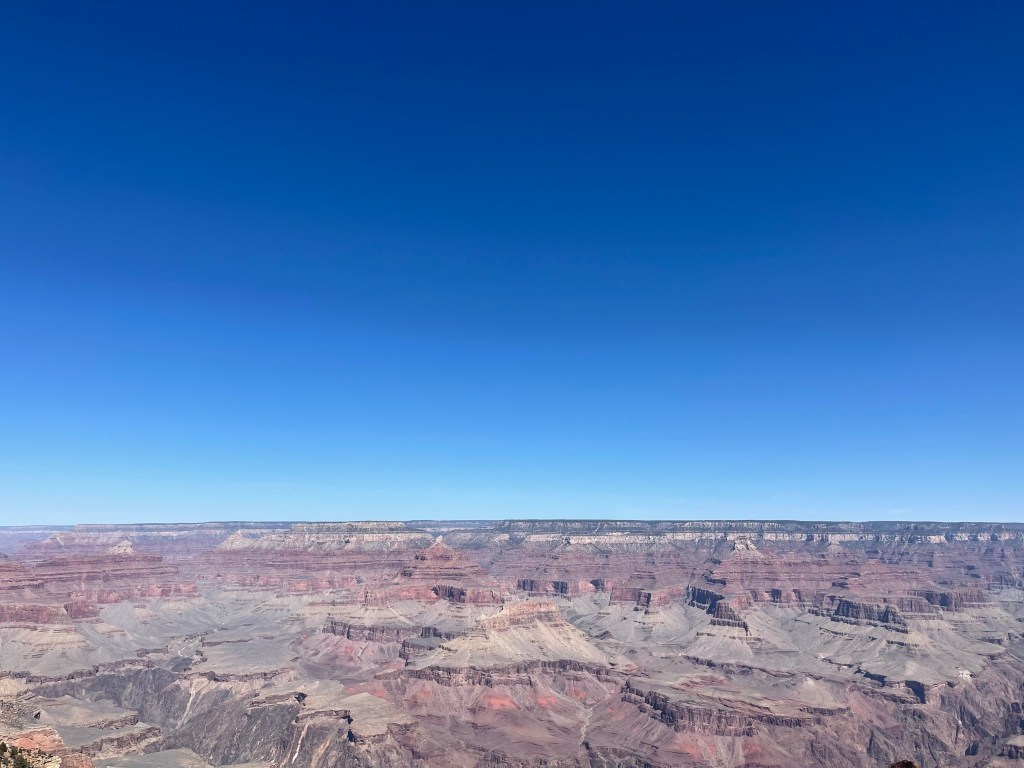
Just recently, I had the opportunity to travel to several national parks out west with the senior class from our school. We visited Bryce Canyon, Zion National Park, Horseshoe Bend, the Grand Canyon, and had the opportunity to witness several other sights along our journey. The beauty of creation was mind-boggling, and simultaneously caused me to recognize how grand and complex creation is, and how small, yet significant I am in its scheme. Here are just a few of the wonders we were able to witness.
When I reflect on the beauty of creation that I was fortunate to witness, I am reminded of Psalm 19:
“1 The heavens declare the glory of God; the skies proclaim the work of his hands. 2 Day after day they pour forth speech; night after night they reveal knowledge. 3 They have no speech, they use no words; no sound is heard from them. 4 Yet their voice[b] goes out into all the earth, their words to the ends of the world.”
Did you catch that? The Starry Night is declaring the glory of God. The skies are speaking, day after day, revealing knowledge. Their voice is going out to the ends of the earth, their voice without speech or words! What knowledge are they revealing? Consider Romans 1:20, “For since the creation of the world God’s invisible qualities—his eternal power and divine nature—have been clearly seen, being understood from what has been made, so that people are without excuse.” They speak of God’s eternal power and divine nature – to the ends of the earth. They are proclaiming His glory. The beauty of creation is attractive and compelling, and people flock to bear witness. We saw this time and again during our journey – people from varied races and cultures, socio-economic situations, young and old alike – traveling to catch a glimpse of beauty, of glory. I can’t help but think that so many of them are actually searching for something far more meaningful, the source of all beauty.
Contemplating the role of creation in declaring the glory of God humbles me. If creation is proclaiming His glory day after day and night after night, without a voice, what am I to do? I’ve been thinking about this since I returned from trip. I’ve been thinking about it a great deal. As we celebrated Palm Sunday yesterday, I reflected on Jesus’ response to the religious leaders as his disciples rightly worshiped Him during His triumphal entry to Jerusalem. His response helps to answer my question. Check it out:
Luke 19 37 When he came near the place where the road goes down the Mount of Olives, the whole crowd of disciples began joyfully to praise God in loud voices for all the miracles they had seen: 38 “Blessed is the king who comes in the name of the Lord!”[b] “Peace in heaven and glory in the highest!”39 Some of the Pharisees in the crowd said to Jesus, “Teacher, rebuke your disciples!” 40 “I tell you,” he replied, “if they keep quiet, the stones will cry out.”
The disciples were proclaiming Jesus was the King, giving Him the praise He was due, as King of Kings and Lord of Lords (1 Tim. 6:15), the image of the invisible God (Col. 1:15), and the Messiah (John 4:25-26). Threatened, the religious leaders chastised Jesus, attempting to make Him silence the disciples. His reply is striking. If they were to keep quiet, the stones would cry out! It was right of them to proclaim Jesus as King, but even if they didn’t, creation would give voice to the truth. As the pinnacle of God’s creation, we have the opportunity, the privilege to give Him the praise He deserves, the praise that creation echoes day after day, and night after night.This is what I am to do.
Some may miss it as they contemplate the beauty of creation. The person of Christ – his life, death, and resurrection- brings the love and glory of God into focus for us. Consider the words of C.S. Lewis, “There is an activity of God displayed throughout creation, a wholesale activity, let us say, which men refuse to recognize. The miracles done by God incarnate, living as a man in Palestine, perform the very same things as this wholesale activity, but at a different speed and on a smaller scale… The miracles in fact are a re-telling in small letters of the very same story which is written across the whole world in letters too large for some of us to see“(‘Miracles’, God in the Dock). My response is to join with creation in proclaiming the beauty, goodness, and truth of God’s love for us by pointing people to Jesus the King, the RISEN savior of the world. I will not be silent, how about you?
14 “Again, it will be like a man going on a journey, who called his servants and entrusted his wealth to them. 15 To one he gave five bags of gold, to another two bags, and to another one bag,[a] each according to his ability. Then he went on his journey. 16 The man who had received five bags of gold went at once and put his money to work and gained five bags more. 17 So also, the one with two bags of gold gained two more.18 But the man who had received one bag went off, dug a hole in the ground and hid his master’s money.
19 “After a long time the master of those servants returned and settled accounts with them. 20 The man who had received five bags of gold brought the other five. ‘Master,’ he said, ‘you entrusted me with five bags of gold. See, I have gained five more.’
21 “His master replied, ‘Well done, good and faithful servant! You have been faithful with a few things; I will put you in charge of many things. Come and share your master’s happiness!’
22 “The man with two bags of gold also came. ‘Master,’ he said, ‘you entrusted me with two bags of gold; see, I have gained two more.’
23 “His master replied, ‘Well done, good and faithful servant! You have been faithful with a few things; I will put you in charge of many things. Come and share your master’s happiness!’
24 “Then the man who had received one bag of gold came. ‘Master,’ he said, ‘I knew that you are a hard man, harvesting where you have not sown and gathering where you have not scattered seed. 25 So I was afraid and went out and hid your gold in the ground. See, here is what belongs to you.’
26 “His master replied, ‘You wicked, lazy servant! So you knew that I harvest where I have not sown and gather where I have not scattered seed? 27 Well then, you should have put my money on deposit with the bankers, so that when I returned I would have received it back with interest.
28 “‘So take the bag of gold from him and give it to the one who has ten bags. 29 For whoever has will be given more, and they will have an abundance. Whoever does not have, even what they have will be taken from them. 30 And throw that worthless servant outside, into the darkness, where there will be weeping and gnashing of teeth.’
Perhaps you can relate to the above image, I know I can. When I was a kid we were outside all the time. Basketball, baseball, backyard football, riding bikes, playing neighborhood tag, walking to the local convenient store, running the playground, or simply hanging out while we determined our next adventure. Such a simple time of life. I was fortunate to have a great group of neighborhood friends in both Ohio and Florida. So many vivid memories. Evenings, weekends, and of course, daily play during the summer. No phones, very few video games, just the fun we created together, and it lasted for hours. Sure, there were times when we were bored, but we were bored together. Rarely would we cut our time short. Typically, the fun would end when a parent would ring the proverbial dinner bell, most often a name being shouted through the neighborhood – and frequently more than once! Then, one day, I did it for the last time, but I didn’t know it.
My children had a very similar experience in their early years. When we moved to Tennessee, we were fortunate to purchase a home on a cul-de-sac. Little did we know at the time, but the neighborhood was filled with kids. I mean to the brim. While actually level, it seemed that our street flowed down hill, ending in our cul-de-sac, as neighborhood activity seemed to gravitate our way. Many of the kids in our immediate proximity were around the same age, and when the weather was favorable, all were outside. Parents would come out as well, visit together, sit on front porches, and often participate in play with the kids. My kids learned to play sports with these friends, threw the baseball with neighborhood Dad’s, created Star Wars plays, ate popsicles, attended each others birthday parties, celebrated holidays, and so much more. Years later, we moved across town, and my kids had played with these friends for the last time, but they didn’t know it (LoNo always!). I watched my kids play with their friends for the last time, and I didn’t know it.
This week, I received a surprise call from a friend. She was one of the above special neighborhood friends. We raised our kids together and she and her husband attended church with us, but we had not spoken in several years. She was calling to let us know that one of the other neighborhood Dads died unexpectedly. I could hardly believe it. I had not seen this friend in years, but to think that he was gone was shocking. This friend had a significant impact on me and our entire family. He and his wife hosted several neighborhood gatherings, backyard movie nights, front porch debriefs in the evening. He had a big personality and he was so much fun to be around. He was the consummate host, welcomed everyone, and loved our kids well. He was so much fun to be around. He taught me a great deal about relationships and hospitality, and I am better for having known him. His loss is a loss for the world, especially those that had the chance to know him. One day I had my last conversation with him, but I didn’t know it.
Boy, I’d love to be able to visit with my friend again. There is so much I’d love to catch up on, and so many topics I’d love to discuss, but I let time pass me by, I missed my opportunity. Time is a formidable foe, fooling us into thinking we have all of it we’d like, when in reality it is an indomitable wave, relentlessly pressing forward, crashing on the shore, slowly stealing often unnoticeable ground. Consider Paul’s admonition and warning from Ephesians 5, “15 Be very careful, then, how you live—not as unwise but as wise,16 making the most of every opportunity, because the days are evil.” The days are evil, and if we are wise, we will watch how we live and make the most of the opportunities we have. We can’t afford to wait or we may miss a last opportunity, and we won’t even know it.
If you are anything like me, you frequently defer to the future. I’ll do it tomorrow, or I’ll do it next week, next month, or even, I’ll do it at some point. Candidly, there are so many things that have been placed on that list. Long ago I memorized a quote from Ben Franklin, “don’t put off until tomorrow, what you can do today”. Even though I know this by rote, it doesn’t always inform my actions. We find a similar directive in James 4, “13 Now listen, you who say, “Today or tomorrow we will go to this or that city, spend a year there, carry on business and make money.” 14 Why, you do not even know what will happen tomorrow. What is your life? You are a mist that appears for a little while and then vanishes. 15 Instead, you ought to say, “If it is the Lord’s will, we will live and do this or that.”16 As it is, you boast in your arrogant schemes. All such boasting is evil.17 If anyone, then, knows the good they ought to do and doesn’t do it, it is sin for them. This world is not our home, our citizenship is in heaven. We are here on temporary assignment (a little while), and our opportunities are limited by this unyielding constraint. I don’t know about you, but I can’t afford to squander my limited opportunities on the distractions and enticements of this world. I know the good I ought to do – I must do it. One day will be my last day on this earth and I will go home to the place He has prepared for me. That day will come, and there will have been so many lasts, but I won’t know it. I plan to make the most of the time I do have, how about you?
We are God’s Handiwork – Created for Good Works 3.28.22
What new opportunity has God prepared for you today? What is keeping you from engaging in that opportunity? If He is calling you to it, He will equip you for it!









 An Alien Journey