
Many Convincing Proofs 4.18.22
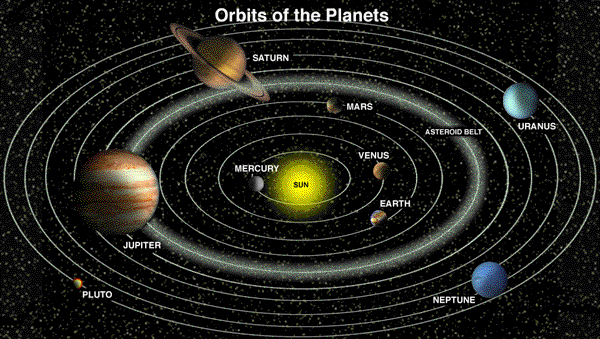
The geocentric model of the universe was the prevailing model from ancient times until the the 16th and 17th century. This model, championed by Aristotle and Ptolemy, stated that the sun, moon, stars, and planets all orbited around Earth. Using simple human faculties of observation, it appeared that the geocentric view was accurate, and it was widely accepted as truth, given a lack of evidence to the contrary. This slowly began to change when Copernicus introduced a heliocentric model of the universe, in which the sun was the center, and the moon, stars, and planets all orbited around it. One of the biggest proponents of heliocentric view was the Italian astronomer, physicist, and engineer, Galileo Galilei. Galileo was able to use the newly invented telescope, rather than simply human faculties, to observe celestial objects, including the phases of Venus, the moons of Jupiter, Saturn’s rings, as well as lunar craters and sunspots. Galileo’s observations supported the heliocentric view of the universe, the one universally accepted today. However, Galileo’s findings were met with significant criticism from the church and other astronomers alike. He was tried by the Roman Inquisition and found “vehemently suspect of heresy” and he was forced to recant. He lived the rest of his life under house arrest, until his death at the age of 77.
Changing course is extremely difficult, especially in the face of overwhelming opposition and life altering consequences, but that is exactly what Galileo did. The telescope allowed him to clearly see the truth, the truth that was there all along, yet was hidden to the naked eye. Galileo simply couldn’t ignore the evidence in front of him. Doubt became faith, when confronted with the evidence. Despite the personal cost, Galileo simply had to change course. The truth was more important than the consequence.
This weekend I was thinking about how the disciples undertook this kind of radical course correction after the crucifixion of Jesus. Consider all that had just transpired. Judas betrayed, Peter denied, and the rest scattered. Not one of the twelve attempted to intervene on behalf of Jesus. He was crucified and buried, and it seemed that three years of their lives were wasted on a mission that would never be realized. Let’s take a closer look at just one of the disciples in John chapter 20.
24 Now Thomas (also known as Didymus[a]), one of the Twelve, was not with the disciples when Jesus came. 25 So the other disciples told him, “We have seen the Lord!” But he said to them, “Unless I see the nail marks in his hands and put my finger where the nails were, and put my hand into his side, I will not believe.” 26 A week later his disciples were in the house again, and Thomas was with them. Though the doors were locked, Jesus came and stood among them and said, “Peace be with you!” 27 Then he said to Thomas, “Put your finger here; see my hands. Reach out your hand and put it into my side. Stop doubting and believe.” 28 Thomas said to him, “My Lord and my God!” 29 Then Jesus told him, “Because you have seen me, you have believed; blessed are those who have not seen and yet have believed.”
Thomas was on one course, that of doubt in the resurrected Christ. The only thing that was going to convince him of the resurrection was hard evidence right in front of him. Well, that’s exactly what he got, and at that point, he believed. Like Galileo, once Thomas saw the truth, he was willing to change course and pay the cost. Jesus met Thomas in his doubts, giving him the opportunity to respond, but He also commends those that have faith without the need for evidence. The reality, however is that there is a significant amount of evidence for the resurrection of Jesus, and it is what caused all of the disciples to change course, at great personal cost.
Consider the words of Luke from Acts 1: “In my former book, Theophilus, I wrote about all that Jesus began to do and to teach 2 until the day he was taken up to heaven, after giving instructions through the Holy Spirit to the apostles he had chosen.3 After his suffering, he presented himself to them and gave many convincing proofs that he was alive. He appeared to them over a period of forty days and spoke about the kingdom of God.” He appeared to them over a forty day period and gave them many convincing proofs. How cool would it be to have heard Jesus give those convincing proofs. The response of the disciples after this period gives us great insight to exactly how convincing the proofs were they were confronted with the evidence and changed course. The truth was more important than the consequence.
Likewise, consider Paul’s words from 1 Corinthians 15: “3 For what I received I passed on to you as of first importance[a]: that Christ died for our sins according to the Scriptures, 4 that he was buried, that he was raised on the third day according to the Scriptures, 5 and that he appeared to Cephas, and then to the Twelve. 6 After that, he appeared to more than five hundred of the brothers and sisters at the same time, most of whom are still living, though some have fallen asleep. 7 Then he appeared to James, then to all the apostles, 8 and last of all he appeared to me also, as to one abnormally born.” Consider the weight of Paul’s argument here, Jesus appeared to more than five hundred brothers and sisters at the same time, and they are still alive. Essentially, if you don’t believe me – go ask them! There is so much weight here, not even considering Paul’s change of course from persecuting Christians, to becoming one, to being a missionary, and penning many of the New Testament Epistles. They were all confronted with the evidence, and the truth was more important than than consequence.
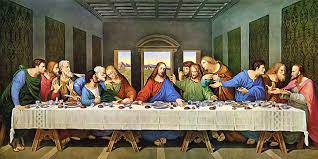
What exactly happened to the disciples? What was the cost of changing course for them after they met the resurrected Christ? What evidence did they encounter that was so compelling? Below is a summation of what can be gathered about their lives. As you read, consider what could have caused them to change course, to move from doubt to faith?
Paul – Martyred in Rome about 66 AD, during the persecution under Emperor Nero. Paul was beheaded.
Peter – Martyred in Rome around the same time. He was crucified, upside down at his request, since he did not feel he was worthy to die in the same manner as his Lord.
Andrew – went to present day Soviet Union. He was possibly the first to bring the gospel to this land. Preached modern-day Turkey and Greece, where he is said to have been crucified.
Thomas – missionary in the area of Syria. Traditionally traveled to India where many believe he was the first to bring the gospel to that area. They claim that he died there when pierced with the spear.
Phillip – had a ministry in North Africa and then in Asia Minor. After a conversion, in retaliation he was arrested and put to death.
Matthew – served in Persia and Ethiopia. Some reports say the was not martyred, while others say he was stabbed to death in Ethiopia.
Bartholomew – had missionary travels to India with Thomas, possibly also Armenia, Ethiopia and the Middle East. There are several mixed accounts about how he was martyred for his faith.
James – the son of Alpheus is believed to have ministered in Syria. It is reported that he was stoned and clubbed to death.
Simon the Zealot – he is said to have ministered in Persia and was killed after refusing to sacrifice to a false god.
Matthias – the disciple that replaced Judas. Most likely traveled to Syria with Andrew and was put to death by burning.
John – John is most likely the only apostle to die of natural causes. He led a church in Ephesus. During a time of persecution in the ’90s, he was exiled to the island of Patmos. There he wrote the last book of the New Testament, Revelation.
What could possibly have caused all of these, and so many more, to radically change course and give up their lives for the cause of Christ? They were confronted with the evidence of the Risen Christ – and they could not turn back. Regardless of overwhelming opposition and great personal cost, the truth was more important than the consequence. I pray that the same can be said of me.
He is Risen – be encouraged friends. Because He lives, we also shall live. Remember – our citizenship is in heaven!
In Him – Andy
 An Alien Journey